The art of ancient Chinese lyricism is a tapestry woven with delicate imagery, where every word carries the weight of centuries-old traditions. In recent years, scholars and enthusiasts alike have turned their attention to the creation of dictionaries dedicated to the poetic imagery found in classical-style lyrics. These compendiums serve as bridges between modern creators and the rich cultural heritage of China's literary past.
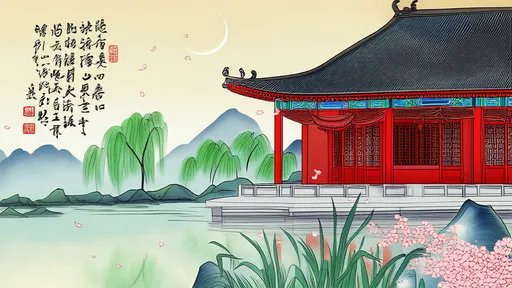
At the heart of this movement lies a profound appreciation for how classical Chinese poetry employs natural elements as emotional metaphors. The moon often symbolizes longing, while wilting flowers speak of life's transience. Willow branches sway with the melancholy of parting, and autumn winds carry whispers of nostalgia. These established conventions form a visual language that resonates deeply within Chinese cultural consciousness.
The compilation of such specialized dictionaries represents more than academic curiosity; it reflects a growing desire among contemporary musicians and poets to reconnect with authentic cultural roots. As mandopop increasingly incorporates classical elements, understanding these traditional symbols becomes crucial for creating works that feel genuinely grounded in Chinese aesthetic traditions rather than superficial appropriations.
Modern lyricists face particular challenges when working with classical imagery. The subtle differences between, say, "red beans" representing lovesickness and "pomegranates" symbolizing fertility require nuanced understanding. A single misused character can transform an elegant allusion into nonsensical wordplay. This precision explains why these specialized dictionaries often include extensive historical context alongside definitions.
Regional variations further complicate matters. Imagery that carried specific meanings in Tang dynasty court poetry might have held entirely different connotations in folk songs from the Ming dynasty. The most comprehensive dictionaries now include geographical and temporal markers, helping creators navigate these shifting cultural landscapes across China's vast historical terrain.
Interestingly, the revival of classical imagery coincides with technological advancements in language processing. Several research teams have begun developing digital versions of these dictionaries with cross-referencing capabilities, allowing users to trace how specific images evolved through different dynasties. This marriage of ancient art and modern technology promises exciting possibilities for both academic research and creative applications.
The pedagogical implications are equally significant. As more universities offer courses on classical Chinese poetry composition, these dictionaries serve as essential textbooks. Students learn not just to recognize traditional imagery but to employ it creatively, ensuring these symbolic traditions continue evolving rather than becoming frozen relics of the past.
Beyond academic circles, the popularity of these reference works speaks to broader cultural currents. In an era of globalization, many young Chinese creators seek to develop artistic voices that feel distinctly rooted yet contemporary. The careful study of classical imagery provides tools for this delicate balancing act between tradition and innovation.
Critics might argue that reducing poetic imagery to dictionary entries risks sterilizing their emotional power. However, practitioners counter that understanding the rules makes their creative breaking more meaningful. When a songwriter consciously subverts traditional symbolism for modern effect, the gesture carries layers of cultural dialogue that would otherwise be impossible.
As nightfall brings contemplation, so does this linguistic preservation effort invite reflection on cultural continuity. These dictionaries represent more than reference tools; they are living testaments to how language carries collective memory across generations. The willow branches may still weep with parting sorrow, but now they do so in lyrics heard through smartphones as well as ancient scrolls.
The future of this endeavor likely holds further interdisciplinary collaborations. Linguists work with musicologists to analyze how classical imagery functions in song lyrics differently than in poetry. Anthropologists contribute insights about how these symbols operate in folk traditions outside literary elites. Each perspective enriches our understanding of this intricate symbolic language.
Ultimately, the value of these dictionaries lies not in rigid prescriptions but in their ability to inspire. They serve as springboards for imagination, inviting contemporary artists to drink from the deep well of Chinese literary tradition while adding their own voices to its endless echo. The moon that Li Bai contemplated remains the same celestial body that shines over today's songwriters - the imagery persists, even as its interpretations multiply across the centuries.
By /Aug 13, 2025

By /Aug 13, 2025
By /Aug 13, 2025
By /Aug 13, 2025
By /Aug 13, 2025

By /Aug 13, 2025
By /Aug 13, 2025
By /Aug 13, 2025
By /Aug 13, 2025
By /Aug 13, 2025

By /Aug 13, 2025
By /Aug 13, 2025

By /Aug 13, 2025

By /Aug 13, 2025
By /Aug 13, 2025
By /Aug 13, 2025
By /Aug 13, 2025
By /Aug 13, 2025

By /Aug 13, 2025

By /Aug 13, 2025
