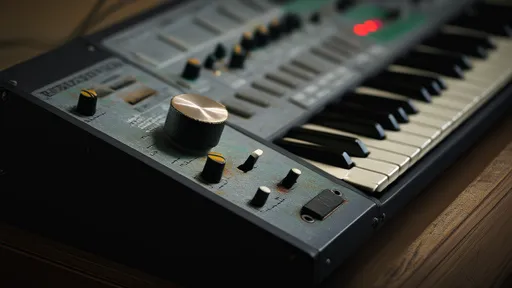
The world of electronic synthesizers has always been at the forefront of innovation, blending cutting-edge technology with artistic expression. Among the many challenges faced by musicians and engineers alike, the issue of interface oxidation has emerged as a critical concern. Over time, the metallic contacts and connectors within synthesizers can degrade due to environmental factors, leading to signal loss, erratic behavior, and even complete failure. Addressing this problem requires a nuanced understanding of both the materials involved and the practical solutions available to restore these intricate systems to their optimal state.
The Science Behind Oxidation in Synthesizer Interfaces
Oxidation occurs when metal surfaces react with oxygen or other elements in the environment, forming compounds like rust on iron or tarnish on silver. In synthesizers, this process primarily affects the contacts within patch bays, MIDI ports, and other critical connection points. The result is an increase in electrical resistance, which can disrupt the delicate analog and digital signals that these instruments rely on. Gold-plated contacts are often used in high-end equipment due to their resistance to oxidation, but many budget and vintage synthesizers rely on cheaper metals that are more susceptible to degradation.
Humidity, temperature fluctuations, and exposure to airborne contaminants accelerate the oxidation process. Musicians who perform in coastal areas or humid climates may notice these issues arising much faster than those in drier environments. Even the oils from human skin can contribute to the problem when frequently touching connectors. The challenge lies not just in preventing oxidation but in reversing its effects without causing further damage to sensitive components.
Traditional Approaches to Contact Cleaning
For decades, the go-to solution for oxidized contacts has been contact cleaner sprays containing chemicals designed to dissolve oxidation and leave behind a protective layer. While effective in the short term, these products often contain volatile organic compounds (VOCs) that can be harmful to both users and the environment. Additionally, repeated use of aggressive cleaners can eventually wear away the metal surfaces they're meant to preserve, creating a cycle of degradation.
Another common method involves mechanical abrasion using specialized tools like contact burnishers or even simple pencil erasers. This approach physically removes the oxidized layer, exposing fresh metal underneath. However, this technique requires extreme care - too much pressure can deform delicate contacts, while too little may leave oxidation intact. Many vintage synthesizer owners are understandably hesitant to employ such invasive methods on rare and valuable equipment.
Emerging Solutions in Oxidation Repair
Recent advancements in materials science have led to the development of more sophisticated oxidation treatment methods. Nano-coating technologies, originally developed for aerospace applications, are now being adapted for use in audio equipment. These ultra-thin protective layers can be applied after cleaning to significantly slow future oxidation without affecting signal quality. Some formulations even claim self-healing properties, where minor scratches or wear points automatically repair themselves.
Electrochemical reduction techniques, borrowed from conservation science, offer another promising avenue. These methods use carefully controlled electrical currents to reverse oxidation at a molecular level, effectively converting rust or tarnish back into pure metal. While still relatively new to musical instrument maintenance, early adopters report excellent results with minimal risk to delicate components. The equipment required remains prohibitively expensive for most individual users but is becoming more accessible through specialty repair shops.
The DIY Movement and Home Solutions
As professional repair services can be costly and difficult to access, many musicians have turned to home remedies and preventative measures. Common household items like isopropyl alcohol, baking soda pastes, and even certain citrus-based cleaners have their advocates. While these solutions may help in mild cases, they often lack the precision and reliability of professional-grade treatments. The synth community continues to debate the efficacy and safety of various homebrew methods through online forums and workshops.
Preventative maintenance has gained attention as musicians become more aware of oxidation risks. Simple practices like regular connector exercise (plugging and unplugging cables to wipe contacts clean), controlled storage environments, and the use of protective caps on unused jacks can dramatically extend interface lifespan. Some enthusiasts have begun experimenting with humidity-controlled storage for their vintage gear, treating their collections with the same care as museum artifacts.
The Future of Synthesizer Interface Preservation
Looking ahead, the intersection of materials science and musical instrument design promises more permanent solutions to the oxidation problem. Manufacturers are beginning to incorporate new alloys and composite materials that resist degradation while maintaining excellent conductivity. Graphene-based contacts, still in experimental stages, could potentially eliminate oxidation concerns altogether while offering superior electrical properties.
On the software side, some developers are working on diagnostic tools that can detect and compensate for signal degradation caused by interface oxidation. These systems might automatically adjust signal strength or apply digital correction to overcome physical limitations in aging hardware. Such approaches could breathe new life into classic synthesizers while preserving their authentic analog character.
The challenge of interface oxidation serves as a reminder that electronic music's tools, like the art form itself, exist at the boundary between the physical and the ephemeral. As technology advances, the community's collective knowledge about maintaining and preserving these instruments continues to grow. What begins as a technical concern ultimately touches on deeper questions about how we value and sustain the tools of creativity across generations.

By /Aug 13, 2025
By /Aug 13, 2025
By /Aug 13, 2025
By /Aug 13, 2025

By /Aug 13, 2025

By /Aug 13, 2025

By /Aug 13, 2025

By /Aug 13, 2025
By /Aug 13, 2025

By /Aug 13, 2025

By /Aug 13, 2025

By /Aug 13, 2025
By /Aug 13, 2025

By /Aug 13, 2025

By /Aug 13, 2025

By /Aug 13, 2025

By /Aug 13, 2025

By /Aug 13, 2025
By /Aug 13, 2025
By /Aug 13, 2025
