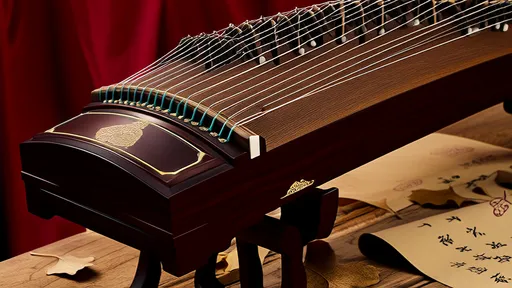
The guzheng, a traditional Chinese zither, has captivated audiences for centuries with its ethereal melodies and intricate playing techniques. Among its many components, the bridge, or "qin ma," plays a pivotal role in both sound production and instrument stability. However, one persistent challenge faced by guzheng players is bridge slippage, which can disrupt performances and even damage the instrument. Addressing this issue requires a blend of traditional craftsmanship and modern innovation.
Bridge slippage occurs when the tension of the strings causes the qin ma to shift or topple during play. This not only interrupts the music but can also lead to detuning or, in severe cases, scratches on the guzheng's soundboard. Historically, musicians relied on materials like beeswax or rubber pads to create friction between the bridge and the soundboard. While these methods offered some stability, they often fell short during vigorous performances or in humid climates where adhesiveness diminished.
In recent years, luthiers and engineers have explored more sophisticated solutions to this age-old problem. One approach involves modifying the base of the qin ma to include micro-textured surfaces or grooves. These minute alterations increase surface area and friction without compromising the bridge's aesthetic or acoustic properties. Another emerging technique incorporates non-slip materials such as silicone-based compounds or specialized fabrics into the bridge design. These materials provide consistent grip while remaining gentle on the instrument's finish.
Beyond material innovations, some manufacturers have turned to physics-based solutions. By precisely calculating the angle and weight distribution of each bridge, they create designs that naturally resist movement under string tension. This method proves particularly effective for custom-made guzheng where bridges can be tailored to specific string gauges and playing styles. Professional musicians have noted that these engineered bridges not only stay firmly in place but also enhance tonal clarity by maintaining optimal string contact.
The quest for the perfect anti-slip solution has also led to hybrid approaches. Some luthiers combine traditional materials with modern technology—for instance, embedding thin layers of nano-grip polymers beneath rosewood bridges. This maintains the instrument's classical appearance while providing contemporary functionality. Meanwhile, experimental designs feature magnetic bridges that lock onto steel-reinforced positions on the soundboard, though these remain controversial among purists who argue they alter the guzheng's authentic vibrational characteristics.
Environmental factors play a significant role in bridge stability, prompting solutions tailored to different climates. In tropical regions where humidity causes wood expansion, bridges with ventilation channels prevent moisture buildup that could reduce friction. Conversely, arid climates benefit from bridges treated with hygroscopic coatings that maintain slight surface tackiness. These climate-specific adaptations demonstrate how deeply guzheng craftsmanship intersects with material science.
For performers, the practical implications of these innovations are profound. A securely anchored bridge allows for more dynamic playing techniques—aggressive tremolos, forceful pizzicatos, and dramatic pitch bends can all be executed without concern for displacement. This technical freedom has begun influencing contemporary guzheng compositions, with modern pieces increasingly incorporating previously impractical techniques. The relationship between instrument development and musical evolution becomes beautifully circular.
Maintenance practices have evolved alongside these anti-slip technologies. Where musicians once routinely applied makeshift adhesives before performances, many now use specialized bridge-setting tools that position qin ma at their acoustically optimal points with guaranteed stability. Workshops increasingly offer climate-controlled bridge-fitting services, recognizing that proper installation is as crucial as the anti-slip technology itself.
Looking forward, the guzheng community continues to balance tradition with innovation. While some schools insist on historical bridge designs with minimal modification, others enthusiastically adopt cutting-edge solutions. This ongoing dialogue between preservation and progress ultimately enriches the instrument's legacy. As anti-slip technologies mature, they quietly revolutionize an ancient art form—not by changing its essence, but by removing physical limitations to its expression.
The story of guzheng bridge stabilization mirrors larger narratives in instrument evolution: a persistent refinement of form to better serve function. From Baroque violins to modern electric guitars, each generation of craftspeople solves the unique challenges of their era. For today's guzheng players and makers, conquering bridge slippage represents both a practical victory and a philosophical commitment—ensuring that nothing slips between the musician's vision and the listener's ear.

By /Aug 13, 2025
By /Aug 13, 2025

By /Aug 13, 2025
By /Aug 13, 2025

By /Aug 13, 2025

By /Aug 13, 2025

By /Aug 13, 2025

By /Aug 13, 2025
By /Aug 13, 2025

By /Aug 13, 2025

By /Aug 13, 2025

By /Aug 13, 2025

By /Aug 13, 2025

By /Aug 13, 2025

By /Aug 13, 2025

By /Aug 13, 2025

By /Aug 13, 2025

By /Aug 13, 2025

By /Aug 13, 2025

By /Aug 13, 2025