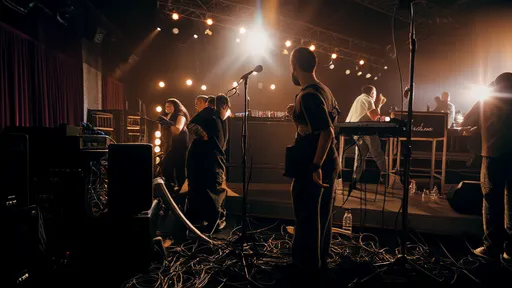
Behind the pulsating lights and thunderous applause of every major music festival lies an intricate web of contingency planning that most attendees never see. While fans lose themselves in the music, backstage crews remain hyper-vigilant, ready to spring into action at the first sign of trouble. The emergency response checklist for festival operations has evolved into a sophisticated playbook that balances rapid crisis intervention with maintaining the show's magical atmosphere.
Medical emergencies dominate the bulk of preparation scenarios. Festival medics report that heat exhaustion, dehydration, and substance-related incidents account for nearly 80% of interventions. "We position our medical tents like chess pieces," explains veteran festival coordinator Darren Kettle. "Each station covers specific crowd density zones, with roving EMT teams filling the gaps. Our golden rule is that no attendable should be more than ninety seconds from professional medical aid." Advanced festivals now employ thermal imaging drones to spot potential heat stroke victims in dense crowds before symptoms become critical.
The rise of extreme weather events has forced festivals to completely rethink their severe weather protocols. What began as simple rain plans has expanded into multi-layered responses for everything from tornado warnings to wildfire smoke. The backstage command center typically monitors seven different weather feeds simultaneously, with evacuation routes dynamically adjusted based on real-time wind direction data. "We've had to cancel sets due to lightning strikes fifteen miles away," shares Lollapalooza's safety director Mei Chen. "The new challenge is communicating these decisions to disappointed fans without causing panic."
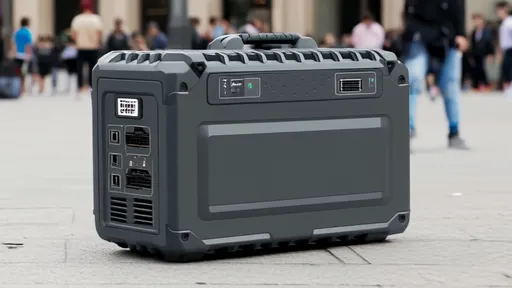
Technical failures present their own unique brand of chaos. When main stage power goes down, crews have approximately ninety seconds to implement backup solutions before crowd energy turns problematic. Modern festivals run parallel power grids - one primary, two backups - with failover systems tested hourly. "We keep silent disco headsets pre-charged for 10% of audience capacity," reveals Glastonbury's head of production. "If sound systems fail, we can instantly distribute these to maintain entertainment while fixing the issue."
Crowd control emergencies require particularly nuanced responses. The tragic incidents at Astroworld and Love Parade have led to radical overhauls in crowd management strategies. Pressure sensors embedded in barriers now feed real-time density metrics to central command, while trained "crowd whisperers" - behavioral specialists disguised as regular attendees - circulate to detect and defuse potential disturbances. "It's about reading the crowd's emotional temperature," explains Roskilde Festival's security lead. "Sometimes playing a specific song can do more to ease tension than a dozen security guards."
Behind every major festival's emergency plan sits an often-overlooked hero: the communications infrastructure. When cell networks become overloaded - as they invariably do - festivals now deploy mesh networks and old-school radio systems simultaneously. "We learned from disasters like the Bataclan attacks how crucial communication is," shares a Coachella organizer anonymously. "Every department head carries three redundant communication devices, including satellite phones that work when nothing else does."
The psychological toll on staff during crises forms another critical part of modern emergency planning. Major festivals now employ trauma counselors specifically for production teams who may witness harrowing situations. "After handling a overdose death, our security personnel receive mandatory debriefing," explains Bonnaroo's HR director. "We've moved beyond just physical safety to holistic wellbeing for everyone on site."
As festivals grow in scale and complexity, so too do their emergency protocols. The checklist that once fit on a clipboard now requires dedicated software tracking hundreds of variables in real time. Yet the core philosophy remains unchanged: anticipate everything, panic at nothing, and ensure the music plays on safely. "The perfect festival emergency," quips a veteran stage manager, "is one the audience never knew happened."

By /Aug 13, 2025

By /Aug 13, 2025

By /Aug 13, 2025

By /Aug 13, 2025

By /Aug 13, 2025

By /Aug 13, 2025

By /Aug 13, 2025

By /Aug 13, 2025

By /Aug 13, 2025

By /Aug 13, 2025

By /Aug 13, 2025

By /Aug 13, 2025

By /Aug 13, 2025

By /Aug 13, 2025

By /Aug 13, 2025

By /Aug 13, 2025
By /Aug 13, 2025

By /Aug 13, 2025
By /Aug 13, 2025

By /Aug 13, 2025
