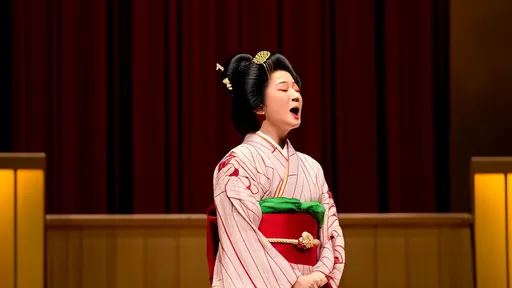
The world of Japanese music is rich with traditions that have evolved over centuries, and among its most distinctive vocal styles is the enka. This genre, often described as a blend of traditional Japanese music with Western influences, carries a unique emotional weight. At the heart of enka’s expressive power lies its signature vocal technique—the vibrato, or kobushi—a trembling, wavering note that conveys deep sentiment. To Western ears, this might sound exaggerated, even theatrical, but within Japanese culture, it resonates as an authentic expression of sorrow, longing, and resilience.
Enka’s origins can be traced back to the Meiji era, when Japan was rapidly modernizing and absorbing foreign influences. The genre itself emerged in the post-war period, becoming a vehicle for nostalgia and a connection to an idealized past. The vibrato in enka is not merely a stylistic choice; it is a cultural artifact. It mimics the natural quiver of the human voice when overcome with emotion, whether in grief or joy. Singers like Misora Hibari and Saburo Kitajima elevated this technique to an art form, their voices trembling with a controlled intensity that could move audiences to tears.
What makes the enka vibrato so distinct is its deliberate unevenness. Unlike the smooth, consistent oscillations found in Western classical singing, enka’s tremolo often varies in speed and depth within a single phrase. This creates a sense of spontaneity, as if the singer is barely holding back their emotions. The technique requires immense breath control and vocal precision—too much wobble, and it becomes comical; too little, and it loses its emotional punch. Mastery of kobushi is what separates legendary enka singers from mere performers.
The cultural significance of this vocal style cannot be overstated. In a society that often values restraint and subtlety, enka provides an outlet for raw, unfiltered emotion. The vibrato acts as a metaphor for the struggles of life—wavering but enduring, fragile yet powerful. It’s no coincidence that many enka songs tell stories of hardship, unrequited love, or the bittersweet passage of time. The trembling voice becomes the listener’s own, a shared expression of universal human experiences.
Modern enka has faced challenges in staying relevant, particularly among younger audiences who gravitate toward J-pop and global music trends. Yet, the genre persists, kept alive by dedicated artists and fans who see it as a vital part of Japan’s cultural identity. Contemporary singers like Jero, a Black American enka performer, have introduced the genre to new listeners, proving that the emotional language of vibrato transcends boundaries. Even as musical tastes evolve, the haunting beauty of enka’s trembling notes continues to captivate those who seek depth and authenticity in music.
To witness an enka performance is to experience a piece of Japan’s soul. The vibrato is not just a technique; it is a window into the collective heart of a nation that has known both suffering and triumph. In its wavering tones, one hears the echoes of history, the weight of tradition, and the enduring power of song to convey what words alone cannot. Whether in the dimly lit bars of Tokyo or the grand stages of national competitions, enka’s trembling voice remains a testament to the beauty of imperfection and the art of emotional truth.

By /Aug 13, 2025
By /Aug 13, 2025
By /Aug 13, 2025
By /Aug 13, 2025
By /Aug 13, 2025

By /Aug 13, 2025
By /Aug 13, 2025
By /Aug 13, 2025
By /Aug 13, 2025
By /Aug 13, 2025

By /Aug 13, 2025
By /Aug 13, 2025

By /Aug 13, 2025

By /Aug 13, 2025
By /Aug 13, 2025
By /Aug 13, 2025
By /Aug 13, 2025
By /Aug 13, 2025

By /Aug 13, 2025

By /Aug 13, 2025
