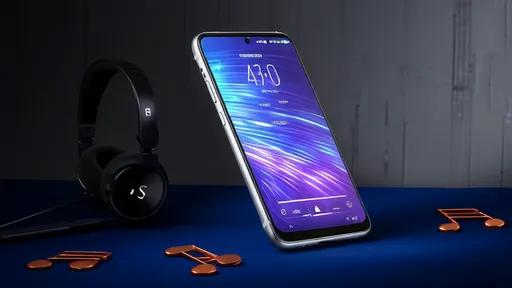
The rise of AI-powered music composition tools has revolutionized the way musicians, producers, and even amateurs create music on their smartphones. These apps promise to democratize music production, offering intuitive interfaces and powerful algorithms that generate melodies, harmonies, and even full arrangements with minimal input. But how do they stack up in real-world use? We took a deep dive into the latest AI music tools to see if they live up to the hype.
The Evolution of Mobile Music Creation
Gone are the days when composing music required expensive equipment or years of training. Today, a smartphone and the right app can turn anyone into a budding composer. AI-driven tools like Amper Music, Endlesss, and Magenta Studio have pushed the boundaries of what’s possible, blending machine learning with creative expression. These apps analyze user input—whether it’s a hummed melody or a tapped rhythm—and transform it into polished musical pieces.
What sets these tools apart is their ability to learn and adapt. Unlike traditional digital audio workstations (DAWs), which rely heavily on manual input, AI composers can suggest chord progressions, generate basslines, and even mimic the style of famous artists. For beginners, this means instant gratification; for professionals, it’s a source of inspiration or a way to quickly sketch ideas.
The User Experience: Intuitive or Overwhelming?
One of the biggest selling points of AI music apps is their accessibility. Developers have prioritized clean, user-friendly interfaces that guide newcomers through the composition process. For instance, apps like BandLab’s SongStarter use simple prompts like mood or genre to generate a foundation for a track. Within seconds, users can tweak tempo, instrumentation, and structure without touching a single note.
However, not all apps strike the right balance between simplicity and control. Some tools, while powerful, bury advanced features behind convoluted menus, leaving more experienced users frustrated. The best apps, like AIVA or HumOn, manage to cater to both ends of the spectrum—offering one-tap generation for novices and deep customization for those who want it.
Sound Quality: Professional or Amateur?
The true test of any music tool lies in the quality of its output. Early AI composers were notorious for producing robotic, lifeless tracks. But recent advancements in neural networks and sound synthesis have led to startling improvements. Apps like Boomy and Soundraw generate surprisingly rich, dynamic arrangements that could easily pass as human-made in a casual listening session.
That said, there’s still a noticeable gap between AI-generated music and top-tier professional productions. While the melodies and harmonies are often impressive, the nuances of human performance—subtle timing variations, emotional phrasing—are harder to replicate. For demo tracks or background music, these tools are more than adequate, but they’re not yet replacing session musicians or seasoned producers.
Collaboration and Community Features
Music creation has always been a social endeavor, and many AI apps now incorporate features that foster collaboration. Endlesss, for example, lets users jam in real-time with others, blending AI-generated loops with live input. Similarly, BandLab’s cloud-based platform allows musicians to share projects and build on each other’s ideas, with AI serving as a creative mediator.
These community-driven aspects are where mobile AI tools shine. They lower the barriers to collaboration, enabling artists from different corners of the world to co-create effortlessly. For solo musicians, the ability to bounce ideas off an AI—and by extension, a global community—can be invaluable.
The Future of AI Music Composition
As impressive as today’s AI music tools are, they’re still in their infancy. The next wave of development will likely focus on emotional intelligence—teaching algorithms to understand and respond to the user’s creative intent on a deeper level. Imagine an app that not only generates a melody but adapts it in real-time based on your facial expressions or physiological responses.
Another frontier is integration with other creative tools. We’re already seeing AI music apps that sync with video editors, game engines, and even virtual reality platforms. This convergence could redefine how music is composed and consumed, blurring the lines between creator and audience.
For now, AI-powered mobile music tools offer a tantalizing glimpse into the future of creativity. They’re not perfect, and they won’t replace human musicians anytime soon. But as a source of inspiration, a learning aid, or a way to quickly bring ideas to life, they’re an exciting addition to any musician’s toolkit.

By /Aug 13, 2025
By /Aug 13, 2025
By /Aug 13, 2025

By /Aug 13, 2025

By /Aug 13, 2025

By /Aug 13, 2025

By /Aug 13, 2025

By /Aug 13, 2025

By /Aug 13, 2025
By /Aug 13, 2025

By /Aug 13, 2025

By /Aug 13, 2025
By /Aug 13, 2025
By /Aug 13, 2025

By /Aug 13, 2025
By /Aug 13, 2025

By /Aug 13, 2025

By /Aug 13, 2025
By /Aug 13, 2025
By /Aug 13, 2025
