The frozen seas of Hokkaido transform into a surreal winter spectacle each year as drift ice blankets the coastline. This natural phenomenon, known as "ryuhyo" in Japanese, draws adventurers and nature enthusiasts to the northernmost island of Japan. Among the most thrilling ways to experience this icy wonder is aboard a specialized icebreaker ship, cutting through the frozen expanse with roaring engines and cracking hulls.
Drift ice forms when ocean currents carry freezing seawater southward from the Sea of Okhotsk, typically arriving along Hokkaido's shores between late January and early March. The ice doesn't merely hug the coastline - it creates a shifting, groaning landscape that can extend kilometers out to sea. This moving ice field represents one of Earth's most southern occurrences of sea ice, making Hokkaido's drift ice exceptionally rare at this latitude.
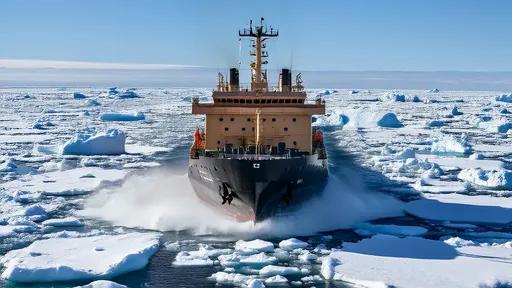
The icebreaker experience begins long before boarding. In the port towns of Abashiri or Monbetsu, visitors bundle against temperatures that frequently plunge below -15°C (5°F). The ships themselves appear almost comically robust compared to typical vessels - their rounded, reinforced bows designed specifically to ride up onto the ice and crush it under the ship's weight. The most famous of these, the Aurora and Garinko II, have become local icons.
As the ship pushes away from the dock, the transition from open water to ice field happens with startling speed. At first, thin plates of ice called "pancake ice" clink musically against the hull. Then comes the moment every passenger anticipates - the first heavy impact as the ship meets the proper drift ice. The vessel shudders, metal groans, and an explosive cracking sound echoes across the frozen seascape as several tons of ice surrender to the ship's momentum.
What surprises most passengers isn't the brute force, but rather the ship's methodical approach. Rather than charging blindly forward, skilled captains seek out weaknesses in the ice - cracks, thinner sections, or areas where currents have created natural fractures. The ship will often back up and make several attempts at particularly stubborn sections, demonstrating that icebreaking involves as much finesse as power.
The sensory experience proves overwhelming. The cold bites at exposed skin while the ship's heated cabins offer temporary refuge. The ice itself emits an otherworldly palette of blues and whites, with pressure ridges creating jagged sculptures that shift constantly. Most haunting are the sounds - the metallic pings of cracking ice, the deep booms of shifting floes, and the occasional eerie creaks that seem to come from beneath the ship itself.
Wildlife sightings add another layer to the adventure. Steller's sea eagles, with their massive two-meter wingspans, often follow the ships hoping for fish stirred up by the propellers. Occasionally, the dark shapes of seals pop up in ice-free sections called "polynyas," their curious faces watching the noisy intruders before slipping back beneath the surface. In recent years, climate change has made these sightings less predictable as ice patterns shift.
The ships typically offer multiple viewing areas, from open decks where ice fragments rain down during particularly vigorous breaks, to enclosed observation lounges with panoramic windows. Crew members provide commentary (in Japanese and basic English) about the ice formations, local ecology, and the ship's operation. Many vessels feature underwater viewing rooms - a surreal perspective where passengers watch ice chunks swirl past like frozen ghosts in the greenish depths.
Climate scientists monitor Hokkaido's drift ice with increasing concern. Records show the ice season has shortened by nearly 30 days compared to a century ago, with the ice becoming generally thinner. Researchers from Hokkaido University frequently join these cruises to take measurements and samples, their presence a sobering reminder of the fragile nature of this ecosystem. Some projections suggest the drift ice could disappear entirely by the end of the century if current warming trends continue.
For now, the icebreaker cruises continue operating between safety limits - avoiding periods when the ice grows too thick for safe navigation or when storms make conditions hazardous. The experience remains profoundly seasonal, with each winter bringing unpredictable variations in ice coverage. Late February traditionally offers the most reliable conditions, though increasingly erratic weather patterns have made scheduling more challenging.
The return journey often leaves passengers in contemplative silence. Having witnessed the raw power of nature and human engineering in equal measure, many describe the experience as humbling. As the ship docks and visitors step back onto solid land, they carry memories of a world where water becomes stone, where ships walk on frozen waves, and where winter asserts its dominion with breathtaking beauty.
Practical considerations for visitors include dressing in layers (thermal underwear, windproof outer shells, and insulated boots are essential), bringing sunglasses to prevent snow blindness, and securing reservations well in advance during peak seasons. Those prone to seasickness generally fare well as the ice dampens wave action, though the ship's sudden movements during icebreaking can challenge sensitive stomachs.
Hokkaido's drift ice breakers represent more than just tourist attractions - they serve as floating classrooms about marine ecosystems, climate change, and humanity's relationship with extreme environments. As the ships cut their zigzag paths through the ice, they trace a fragile boundary between accessible adventure and untouched wilderness, offering passengers a rare chance to witness one of winter's most magnificent phenomena before it potentially vanishes forever.

By /Aug 13, 2025
By /Aug 13, 2025

By /Aug 13, 2025

By /Aug 13, 2025

By /Aug 13, 2025

By /Aug 13, 2025

By /Aug 13, 2025

By /Aug 13, 2025
By /Aug 13, 2025

By /Aug 13, 2025

By /Aug 13, 2025

By /Aug 13, 2025
By /Aug 13, 2025

By /Aug 13, 2025

By /Aug 13, 2025

By /Aug 13, 2025

By /Aug 13, 2025

By /Aug 13, 2025
By /Aug 13, 2025

By /Aug 13, 2025