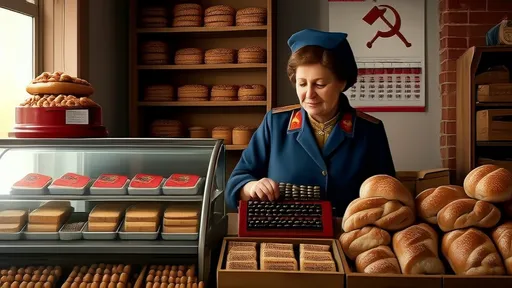
In recent years, Russia's state-owned retail sector has emerged as a significant player in the country's economy. These government-run stores, often referred to as "state shops," have become a focal point in discussions about economic policy, consumer access, and market dynamics. Unlike private retailers, these establishments operate under direct or indirect control of the state, offering a unique blend of affordability, regulation, and sometimes controversy.
The concept of state-run retail is not new in Russia. It traces its roots back to the Soviet era, when nearly all commerce was controlled by the government. However, the modern iteration of these stores differs in several key aspects. Today, they exist alongside a thriving private sector, often serving as a stabilizing force in regions where private investment is scarce. The Russian government has framed these outlets as a means to ensure basic goods remain accessible to all citizens, particularly in remote or economically disadvantaged areas.
One of the most notable examples is the "Rosselkhozbank" chain, which specializes in agricultural products. These stores source directly from local farmers, cutting out middlemen and theoretically reducing costs for consumers. The model has been praised for supporting domestic producers while keeping prices low. However, critics argue that the system lacks transparency and may distort local markets by undercutting private competitors who cannot match state-subsidized pricing.
The expansion of state retail has accelerated since 2014, when Western sanctions first targeted Russia's economy. Facing potential shortages and price volatility, the government increasingly viewed state-run distribution channels as a strategic necessity. This was particularly evident in the food sector, where countersanctions on Western agricultural imports created both challenges and opportunities for domestic suppliers. State stores became important vehicles for implementing these policies while maintaining stable supplies of staple goods.
Quality and selection in these establishments often spark debate. While some locations offer perfectly acceptable merchandise at reasonable prices, others have gained notoriety for limited choices and variable quality standards. Unlike private retailers who must constantly innovate to attract customers, state shops face less competitive pressure. This has led to situations where certain locations become complacent, offering subpar customer service or outdated product selections. Nevertheless, in many rural areas, these stores represent the only reliable source for basic necessities.
Financially, the picture is complex. State retailers don't operate under the same profit imperatives as private businesses. They can sustain losses that would bankrupt commercial operations, supported by government subsidies or preferential treatment. This has raised concerns about fair competition, with private retailers complaining they cannot compete with entities that don't face the same financial constraints. Proponents counter that these stores fulfill important social functions that transcend pure market economics.
The political dimension cannot be ignored. State retail has become intertwined with Russia's broader economic sovereignty agenda. By controlling distribution channels for essential goods, the government gains another lever to influence prices, availability, and even the types of products consumers can access. This control extends beyond economics into the realm of social policy, as these stores often become instruments for implementing various government initiatives, from promoting domestic products to enforcing sanctions-related trade restrictions.
Looking forward, the role of state retail in Russia appears set to grow. Recent legislative proposals suggest expanding the network, particularly in the pharmaceutical sector where the government aims to create a parallel system of state-run pharmacies. This expansion reflects both practical considerations about supply chain resilience and ideological commitments to maintaining state influence over critical economic sectors. As international economic pressures continue and domestic priorities evolve, these hybrid commercial-governmental entities will likely remain a distinctive feature of Russia's economic landscape.
The phenomenon of state retail in Russia presents a fascinating case study in how governments intervene in markets while nominally maintaining capitalist structures. These operations blur traditional boundaries between public and private sectors, creating unique challenges and opportunities. For Russian consumers, they represent both a safety net and a limitation—a reminder of the state's pervasive role in everyday life. As global economic uncertainties persist, other nations may look to Russia's experiment with state retail as they consider their own responses to market instability and social welfare concerns.
By /Aug 13, 2025

By /Aug 13, 2025
By /Aug 13, 2025
By /Aug 13, 2025
By /Aug 13, 2025
By /Aug 13, 2025
By /Aug 13, 2025

By /Aug 13, 2025
By /Aug 13, 2025

By /Aug 13, 2025
By /Aug 13, 2025

By /Aug 13, 2025
By /Aug 13, 2025

By /Aug 13, 2025

By /Aug 13, 2025

By /Aug 13, 2025
By /Aug 13, 2025

By /Aug 13, 2025

By /Aug 13, 2025
By /Aug 13, 2025
