The concept of time has always fascinated humanity, and nowhere is this more evident than in the peculiar case of Narita Capsule: 9 Hours. This enigmatic phrase has sparked curiosity among travelers, urban explorers, and even philosophers. What does it mean to compress time into a nine-hour capsule at one of the world's busiest airports? The answer lies in the intersection of design, efficiency, and the modern traveler's relentless pursuit of rest amid transit.
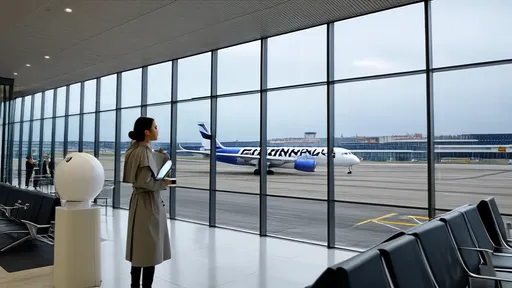
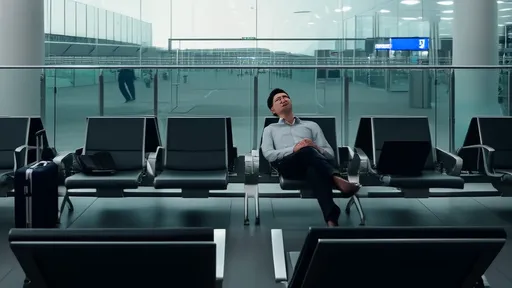
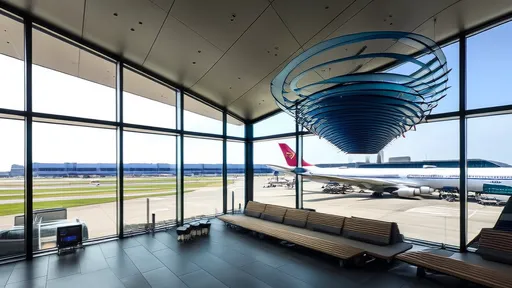
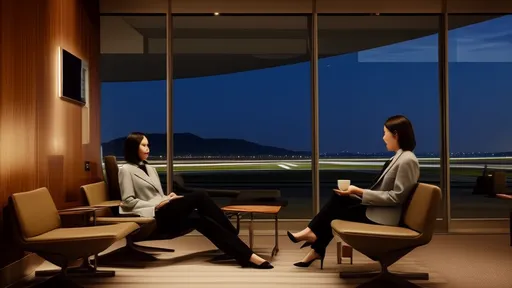
Narita International Airport, located just outside Tokyo, is a hub of constant motion. Thousands of passengers pass through its gates daily, many of them facing long layovers or delayed flights. Enter the 9 Hours capsule hotel, a minimalist sanctuary designed to offer weary travelers a place to recharge—literally and figuratively. The name itself is a stroke of brilliance: nine hours is the average time a person needs to sleep, shower, and prepare for the next leg of their journey. It’s not just a hotel; it’s a temporal oasis.
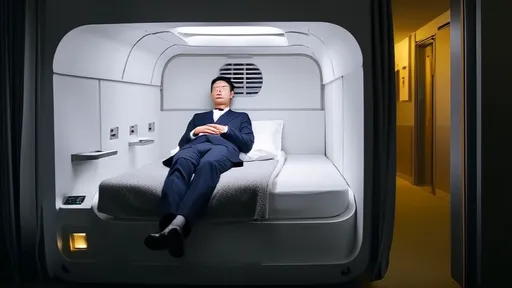
The design philosophy behind Narita Capsule: 9 Hours is rooted in Japanese efficiency. Each capsule is a compact, pod-like space, just large enough for a single person to lie down. The interiors are stark white, illuminated by soft, ambient lighting that mimics the passage of time. There are no unnecessary frills—no televisions, no minibars. This is a place for pure, uninterrupted rest. The capsules are stacked in rows, creating a honeycomb effect that feels both futuristic and oddly comforting. It’s as if you’re stepping into a sci-fi novel where time is measured in breaths rather than minutes.
But the genius of 9 Hours goes beyond its physical design. The hotel operates on a strict time-based system. Guests check in for a maximum of nine hours, and the entire experience is tailored to that timeframe. The showers are timed to conserve water, the lighting adjusts to simulate dawn as your stay comes to an end, and even the ambient noise is calibrated to gently nudge you awake. It’s a masterclass in temporal architecture, where every element is designed to make those nine hours feel like a complete cycle of rest and renewal.
What’s most striking about Narita Capsule: 9 Hours is how it challenges our perception of time in transit. Airports are typically places of limbo, where time feels suspended. But here, time is not just acknowledged—it’s harnessed. The capsule hotel transforms those awkward, in-between hours into something purposeful. It’s a reminder that even in the most transient spaces, there’s an opportunity to reclaim time and use it meaningfully.
The popularity of 9 Hours has sparked a broader conversation about the future of travel accommodations. As air travel becomes more accessible and layovers more common, the demand for efficient, no-nonsense lodging is growing. Capsule hotels, once a quirky novelty, are now being reimagined as essential infrastructure for the modern traveler. Narita’s iteration stands out because it doesn’t just offer a place to sleep; it offers a curated experience of time itself.
Critics might argue that the 9 Hours concept is overly mechanistic, reducing human rest to a timed transaction. But there’s something undeniably poetic about it. In a world where time is our most precious commodity, the idea of compressing rest into a perfect, self-contained unit feels almost revolutionary. It’s a defiant statement against the chaos of travel, a way to carve out order in the midst of turbulence.
For those who have experienced Narita Capsule: 9 Hours, the takeaway is often the same: it’s not just about sleeping. It’s about resetting. The nine-hour limit forces you to prioritize, to let go of distractions, and to focus on what your body actually needs. In that sense, the capsule becomes a metaphor for modern life—how much can we accomplish when we strip away the unnecessary and concentrate on the essential?
As airports around the world grapple with overcrowding and the stresses of modern travel, 9 Hours offers a blueprint for the future. It’s a reminder that innovation doesn’t always mean adding more—sometimes, it means refining, simplifying, and mastering the art of less. The next time you find yourself stranded in an airport, watching the clock tick away, you might just wish for a nine-hour capsule of your own.

By /Aug 13, 2025
By /Aug 13, 2025

By /Aug 13, 2025

By /Aug 13, 2025

By /Aug 13, 2025
By /Aug 13, 2025
By /Aug 13, 2025
By /Aug 13, 2025
By /Aug 13, 2025
By /Aug 13, 2025

By /Aug 13, 2025

By /Aug 13, 2025

By /Aug 13, 2025

By /Aug 13, 2025

By /Aug 13, 2025
By /Aug 13, 2025

By /Aug 13, 2025

By /Aug 13, 2025
By /Aug 13, 2025
By /Aug 13, 2025
